Wholesale
Placed by hand this first year — carried into the restaurants and shops I want them in, poured across the counter while a buyer tastes. The accounts you build that way are the ones that last.
Imports
A boutique import project, built on one conviction: where a thing grows and how it's made aren't background details — they're the flavor itself. I go to the regions the market has passed over, find the producers whose work proves it, and bring it to the US with the storytelling it deserves.
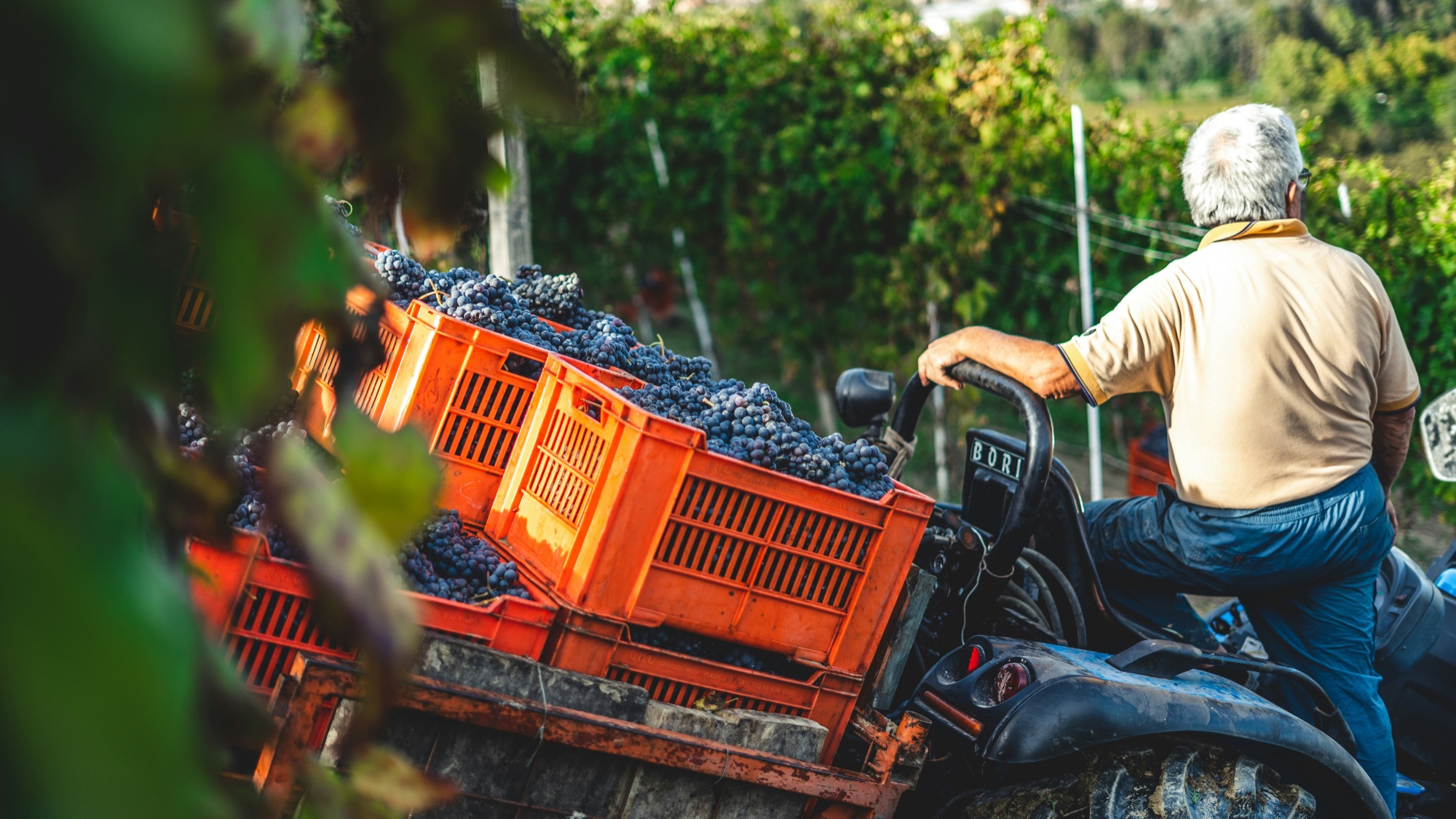
Harvest — where the flavor is already being decided. Photograph by Andrea Cairone
What I look for
A family that has farmed the same slope for four generations. A fermentation they can't fully explain but never get wrong. A method too slow or too small to interest anyone building for scale.
I'm not building a catalog — one wine, one oil, one of each to fill a shelf. I look for singular things: producers whose work is unlike anyone else's, however many of them a region turns up. It's the only honest way to do this. It lets me stand behind every bottle, and it keeps the people who made it from being flattened into a commodity the moment they're found.
What does this specific piece of earth taste like — and who are the people making that legible?
The range
Each place arrives as a chapter — the wine first, then the oil pressed down the road, the preserved lemons and anchovies and honey made by the same hands. The category is never the point. The point is a complete picture of one piece of earth, and what it tastes like when soil and people have been working together for a very long time.
Why me
I'm a food scientist before anything else. When a wine smells like a struck match, that isn't poetry — it's a volatile thiol thrown off when the ferment runs low on oxygen, the same class of sulfur compound behind the smell of flint on steel. I can usually tell you why a flavor is in the glass, down to the chemistry that put it there.
That grounding lets me write about these foods honestly: not "notes of," but the real reason a slow ferment or a hand-timed harvest makes something no factory can copy. The science is why you can trust me. The writing is how I make you feel why it matters.
How to get it
Placed by hand this first year — carried into the restaurants and shops I want them in, poured across the counter while a buyer tastes. The accounts you build that way are the ones that last.
Wine and provisions, shipped with the writing that explains them. Each box is less a delivery than an introduction to a person and a place.
Read the place. Then taste it.
Wine paired with the food from the same ground — the oil, the conserva, the honey. A whole region in a single sitting.
Buyers, retailers, and the curious — tell me where to send the first dispatch.